Research
Research lines
Our projects spring from curiosity and a passion for understanding nature, growing like seeds that, with each discovery, strengthen the future of our ecosystems.
Grassland and global change
Natural, seminatural, and anthropogenic grasslands cover about 40% of the Earth’s land surface and provide essential ecosystem services, including carbon storage and support for diverse animal communities. They store 20–30% of terrestrial carbon, mainly in soils, and have high economic and ecological value. However, grasslands are increasingly threatened by global change drivers such as land-use change, biodiversity loss, eutrophication, and climate change. In Spain, grasslands are vital for rural economies, supporting livestock production, honey production, and traditional activities based on natural fibers.
Ecosystem and biogeochemical coupling
Ecosystem science has long assumed that highly sustainable ecosystems are those with tightly coupled flows of energy and materials. These flows are governed by ecological network architecture and biogeochemical processes acting across spatial and temporal scales. Ecosystem coupling reflects the connectivity among organisms—microbes, fungi, plants, and animals—and with their physical and chemical environment. Biotic interactions, including mutualistic and antagonistic relationships, are key to maintaining ecosystem stability. Likewise, tightly linked elemental cycles are essential for species diversity and for plant, animal, and microbial nutrition.
Sustainable vituculture
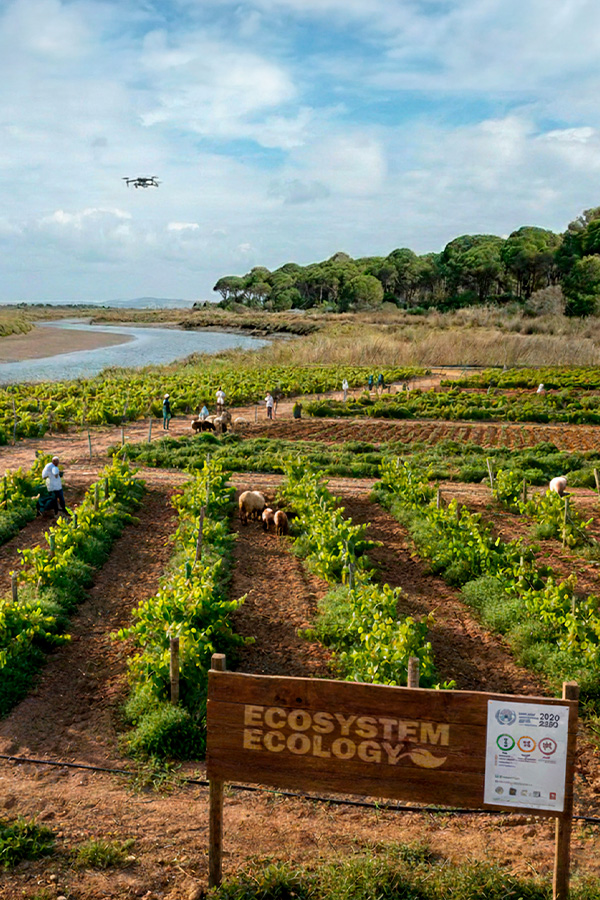
Vineyards are a major global perennial crop, covering 7.4 million hectares worldwide, with Spain leading in cultivated area. Traditionally, vineyards supported high biodiversity, including plants, birds, and insects. However, modern intensive management, characterized by heavy agrochemical use and frequent tillage, has reduced biodiversity and increased soil degradation. These practices have created eroded, biologically impoverished systems dependent on chemical inputs. Sustainable, nature-based management strategies are therefore needed to restore biodiversity and ecosystem services such as soil fertility, carbon sequestration, and natural pest control.
Research Projects
Experimental and lab facilities
Grassland
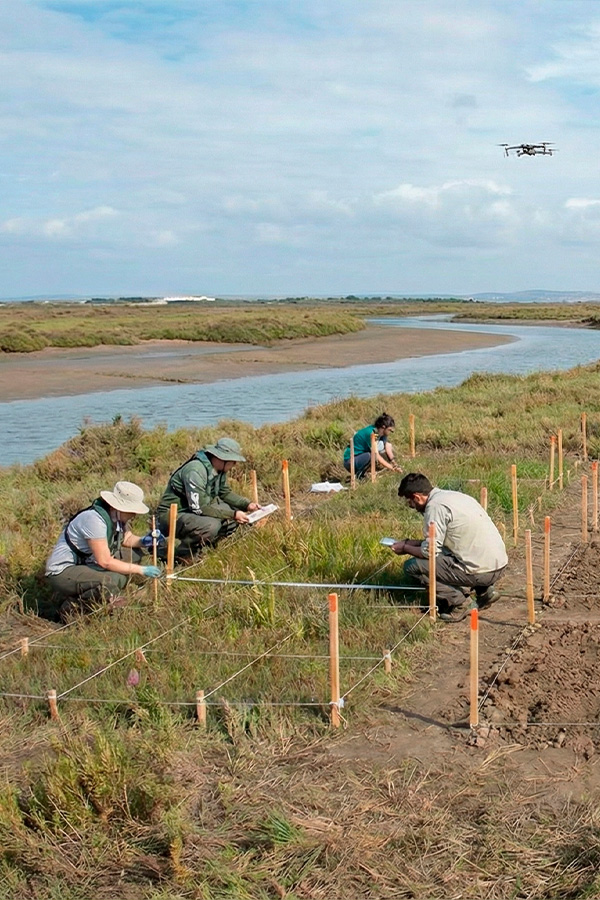
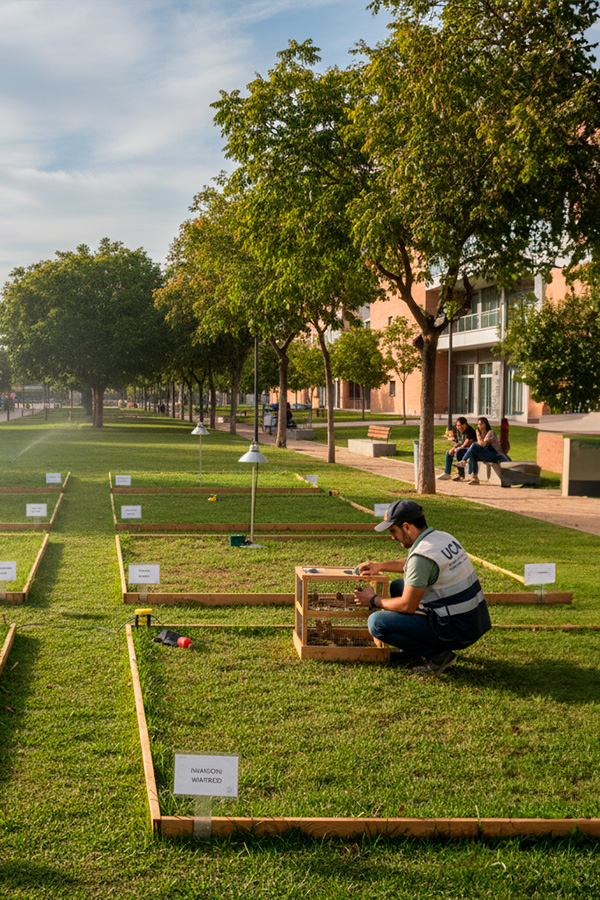
Our experimental grassland plot in the Marismas de los Toruños–La Algaida Park is a unique floodable grassland in the Bay of Cádiz, valuable for biodiversity conservation. It forms part of the global DRAGNet network, which studies how plant communities assemble and recover under soil disturbance and eutrophication.
Equipped laboratory
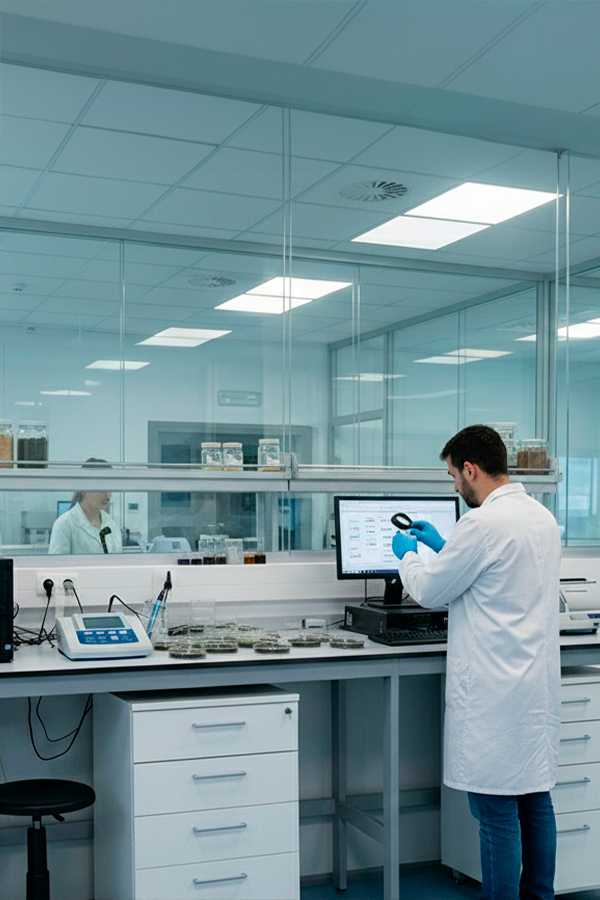
The lab is equipped to perform key soil biogeochemistry analyses, including nutrient quantification, enzyme activity, particle size distribution, pH, and other physicochemical measurements. It also includes tools to extract soil fauna, enabling integrated study of soil health and ecosystem functioning.